
Sealing Ground Moisture at the Source
Vapor barrier installation in Charleston for crawl spaces where ground moisture and humid air are penetrating foundations and floor systems
Ground moisture rising through an exposed crawl space floor is one of the most consistent contributors to wood rot, mold growth, and air quality problems in Charleston-area homes. First Class Crawlspace Solutions installs heavy-duty vapor barriers that seal crawl space floors and walls to block moisture transmission at the point where it enters the structure. The work serves homeowners whose crawl spaces show visible dampness on the ground, efflorescence on foundation walls, or wood framing that feels soft to the touch—all indicators that ground moisture has been accumulating without a physical barrier to stop it.
The Lowcountry's saturated soil conditions mean that even homes without active water intrusion face persistent upward moisture migration through the ground. Vapor barrier material selection accounts for this—thicker mil ratings resist puncture from debris and provide a longer service life in spaces where access clearance is low and foot traffic during maintenance is unavoidable. Installation involves sealing the barrier at the perimeter wall, overlapping seams by a minimum distance and taping them to prevent gaps, and cutting precisely around support columns and piers so the seal remains continuous. These details separate a functional vapor barrier from a loosely laid sheet that allows moisture to travel under and around edges.
Arrange a crawl space inspection to identify where moisture is entering and confirm what barrier material and installation approach your space requires.
What You Notice Once the Barrier Is Finished
Vapor barrier installation is the foundational step in crawl space encapsulation—it precedes dehumidifier installation and drainage work because its effectiveness determines how much moisture the other systems need to manage. The installation process begins with clearing debris from the crawl space floor, confirming there is no active standing water, and mapping any areas where drainage corrections are needed before the barrier goes down. Installing a vapor barrier over standing water or saturated ground traps moisture against the foundation rather than blocking it, which is why condition assessment drives the installation sequence.
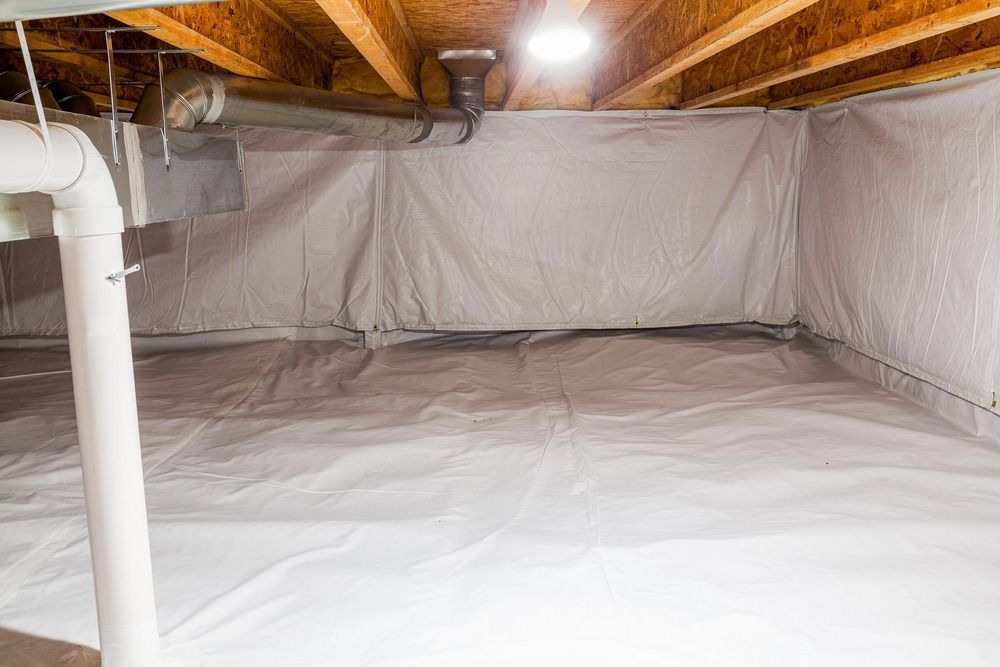
After a correctly installed vapor barrier is in place, the crawl space floor changes from a damp, organic-smelling surface to one that stays visibly dry. Framing and subfloor materials above the barrier stop absorbing ground moisture, which halts the progressive softening of wood that eventually leads to floor deflection and structural repairs. First Class Crawlspace Solutions treats vapor barrier installation as the foundation of an integrated moisture control system—the dehumidifier and drainage components that follow are calibrated based on conditions that the barrier itself has already improved.
Not all vapor barrier projects are identical in scope. Wall coverage versus floor-only installation, the number of penetrations that require sealing, and whether existing failed barriers need removal and disposal all affect the complexity of the work. Homeowners should understand that a floor-only barrier without wall coverage leaves a moisture pathway through the foundation walls—both surfaces need to be addressed for the system to function as designed.
Answers to Frequent Vapor Barrier Questions
Vapor barrier installation involves material choices and installation details that significantly affect long-term performance, particularly in a humid coastal environment where conditions stress materials year-round.
What thickness of vapor barrier is appropriate for a Charleston crawl space?
Crawl spaces in this region typically require a minimum of 12-mil barrier material, with 20-mil options used in spaces that have rougher ground surfaces, lower clearance, or a history of pest activity that increases puncture risk.
How are seams and edges sealed to prevent moisture from bypassing the barrier?
Seams are overlapped by at least 12 inches and sealed with specialized tape rated for vapor barrier adhesion—perimeter edges are secured to the foundation wall above the ground line using mechanical fasteners and sealant to prevent the barrier from pulling away over time.
Why does a vapor barrier need to cover the walls, not just the floor?
In Charleston's coastal environment, foundation walls absorb and transmit humidity from the surrounding soil—a floor-only barrier reduces ground moisture but leaves wall transmission unchecked, which continues to raise ambient humidity in the enclosed space.
What condition does the crawl space need to be in before installation begins?
Active drainage issues and standing water must be resolved first, and existing insulation that has already absorbed moisture may need to be removed so it does not hold humidity against the new barrier's surface.
How does vapor barrier installation interact with dehumidifier performance?
A properly sealed barrier reduces the moisture load the dehumidifier must process, allowing it to reach and maintain target humidity levels more efficiently—without the barrier, the dehumidifier runs against a continuous moisture source and may never achieve stable conditions.
First Class Crawlspace Solutions approaches vapor barrier work as a licensed foundation and moisture control installation, not a general contractor project—call (843) 471-0920 to schedule an evaluation and confirm the material specifications and sealing approach your crawl space requires.