
Water Redirected Before Foundation Saturation Occurs
Crawl Space Drainage System Installation in Charleston for properties where groundwater or surface runoff is reaching the foundation floor
Low-elevation coastal lots in the Charleston area sit above a water table that responds quickly to rainfall and tidal cycles, meaning the ground beneath many foundations is rarely fully dry. First Class Crawlspace Solutions installs perimeter and sump drainage systems designed specifically for these high-water-table conditions, redirecting groundwater movement away from foundation floors before it accumulates and begins saturating structural materials. Properties in West Ashley and across the Charleston coastal zone that experience water on the crawl space floor after moderate rainfall are showing the clearest sign that passive moisture management—ventilation, surface barriers alone—is no longer sufficient for the hydrostatic conditions below grade.
Drainage system installation involves perimeter drain tile placement along the interior foundation footing, sump pit excavation at the lowest collection point in the crawl space, and pump integration sized to move the volume of water that the specific lot's groundwater and rainfall conditions produce. These components are designed to work in coordination with vapor barriers and dehumidifiers—drainage removes liquid water, barriers slow vapor transmission, and dehumidifiers manage residual airborne humidity. First Class Crawlspace Solutions incorporates drainage into approximately 80 percent of encapsulation projects because the Lowcountry environment routinely requires active water removal rather than passive moisture management alone.
Request a drainage assessment to determine whether your crawl space conditions require a perimeter system, sump pump installation, or both.
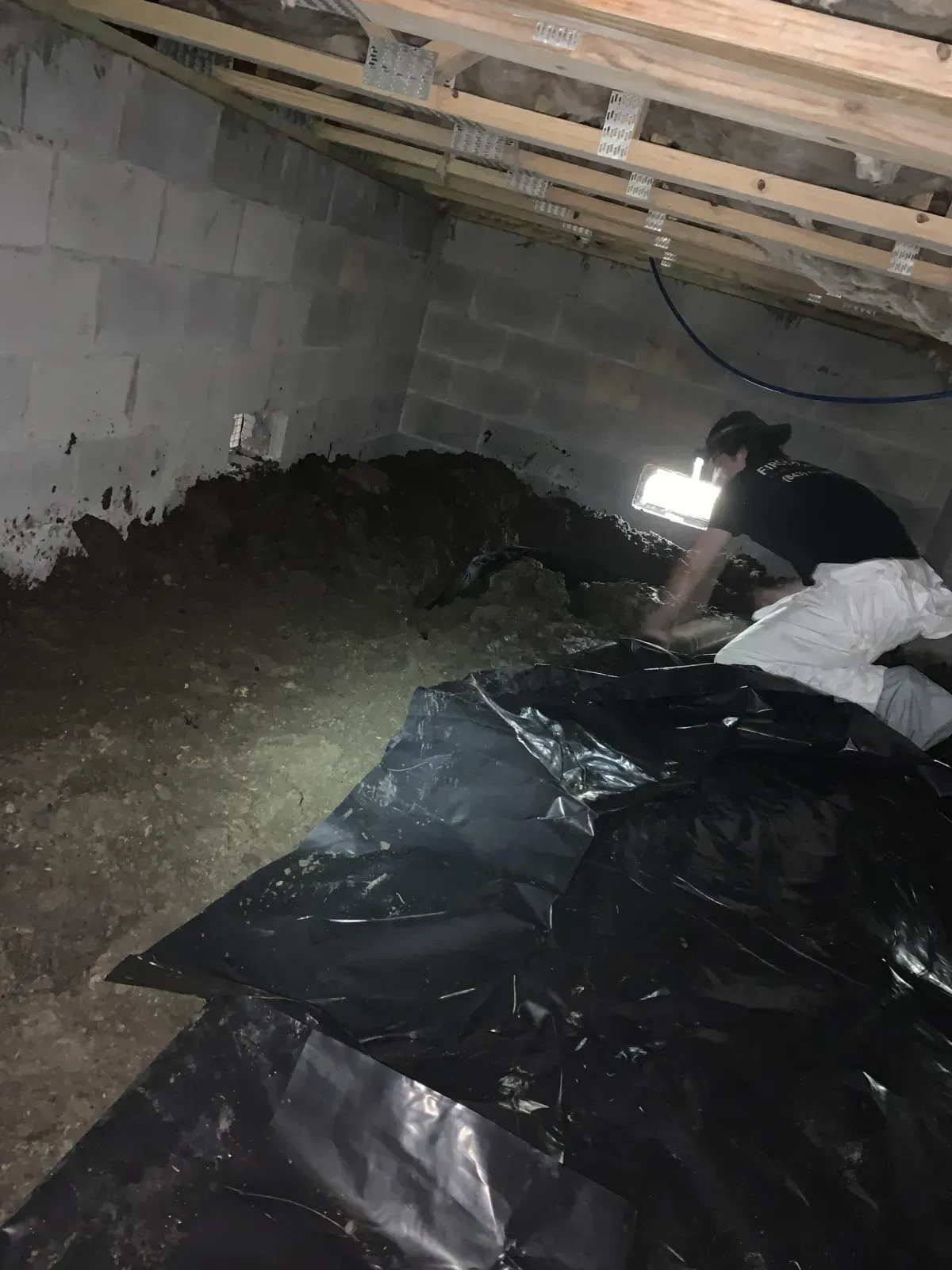
What Proper Crawl Space Drainage Requires
Perimeter drain tile placement must account for the slope of the crawl space floor to ensure water moves toward the sump pit rather than pooling at low points between collection channels. In older Charleston homes where the crawl space floor is uneven due to decades of soil settling, this sometimes requires grading before tile placement to establish the correct flow path. Sump pit depth is determined by the water table elevation relative to the footing, not by a standard dimension—oversized pits in high-water-table areas prevent the pump from short-cycling, which extends equipment lifespan and maintains consistent collection capacity.
After a drainage system is operational, the crawl space floor remains dry between rain events rather than showing residual puddling or mud deposits from previous infiltration. Sump pump operation becomes audible and periodic during heavy rainfall rather than continuous, which indicates the system is collecting and evacuating water at a rate proportional to the infiltration load. First Class Crawlspace Solutions integrates drainage installation with encapsulation sequencing so the system is in place and tested before vapor barriers are installed over it.
Drainage systems require periodic inspection of the pump float mechanism, discharge line terminus, and inlet screens to confirm the system remains clear of debris and functioning at rated capacity. Properties on lots with significant clay soil content—common in the inland portions of the Charleston metro—may experience more frequent inlet screen clogging than properties in sandier coastal soils, which affects recommended inspection intervals.
Questions Before Starting Your Project
Drainage installation questions typically focus on system components, maintenance requirements, and how the drainage system fits within a broader crawl space improvement project.
How does a perimeter drain tile system differ from a sump pump alone?
Perimeter drain tile collects water along the full foundation wall perimeter and channels it to the sump pit—without the tile network, a sump pump can only draw from the immediate area of the pit, leaving large portions of the crawl space floor saturated.
What happens to the drainage system during a power outage?
Sump pumps require power to operate, making a battery backup unit an important consideration for Charleston properties where summer storms can interrupt power during the same events that generate the heaviest groundwater infiltration.
Why does Charleston's soil composition affect drainage system design?
The Lowcountry's mix of sandy coastal soils near tidal areas and compacted clay soils further inland creates different drainage rates and hydrostatic pressure profiles—system sizing accounts for these soil-specific water movement rates.
How do I know if my foundation needs drainage before encapsulation?
If standing water appears on the crawl space floor after rain, or if soil beneath the crawl space remains visibly saturated between weather events, drainage is a prerequisite rather than an optional component.
What maintenance does a crawl space drainage system require?
Annual inspection of the pump mechanism, float switch, inlet screens, and discharge line confirms the system is clear and properly operational before the high-rainfall season begins.
First Class Crawlspace Solutions designs and installs drainage systems as standalone projects and as integrated components of full crawl space encapsulation work across Charleston. Call (843) 471-0920 to schedule a foundation drainage evaluation and determine the appropriate system configuration for your property's groundwater conditions.