Floors That Signal a Crawlspace Problem Below
Sagging Floor Repairs in Charleston for homes where soft, bouncy, or uneven floors indicate active joist deterioration or foundation settlement
A floor that dips near a doorway or bounces underfoot is rarely a flooring problem—it is almost always a crawlspace problem. First Class Crawlspace Solutions addresses sagging floors in Charleston by identifying and correcting the structural source: rotted joists, moisture intrusion, or soil settlement beneath the home. Without treating that source, surface corrections will fail within a season or two.
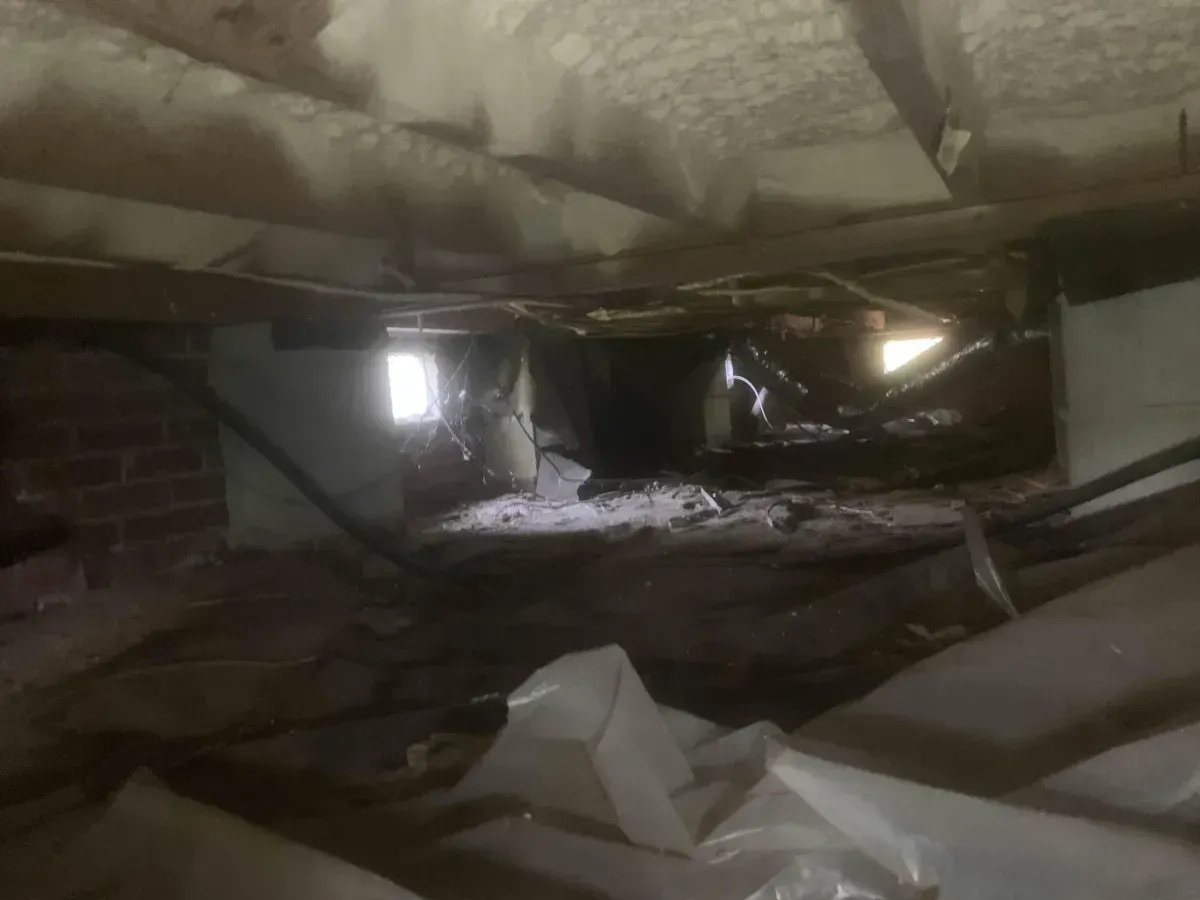
Lowcountry humidity is the primary accelerant here. The combination of coastal air, poor subfloor ventilation, and clay-heavy saturated soils creates conditions where wood rot advances faster than in most other regions. Crawlspace joists in West Ashley and Johns Island properties, for example, can show significant rot within a few years of a persistent moisture event—even in relatively newer construction. First Class uses licensed foundation and framing specialists who inspect for rot extent, active moisture sources, joist integrity, and whether the soil below has shifted enough to affect the foundation bearing points.
Schedule a crawlspace inspection to identify whether the floor movement in your home traces back to joist damage, settlement, or an active moisture condition.
How Crawlspace Conditions Cause Structural Floor Failure
The repair process begins with a full crawlspace assessment, not a measurement of the floor deflection from above. Licensed crew members enter the crawlspace to document moisture levels, map any rot through the joist system, check beam and post conditions, and evaluate whether the foundation itself has moved. In Charleston-area homes, saturated soil is a frequent contributor: when ground below the crawlspace becomes consistently waterlogged, concrete piers and wood posts lose stable bearing, which shifts load distribution and causes the floor plane above to drop in localized areas.
After the inspection, clients notice a firm, level floor surface where bounce or dip was previously felt underfoot. Repairs include sistering compromised joists—meaning new lumber is fastened alongside damaged members to restore load capacity—along with rot treatment and, in most cases, encapsulation and drainage work to eliminate the moisture condition that caused the damage. Because First Class operates as an integrated crawlspace restoration contractor rather than a framing-only crew, the structural repair and the moisture correction happen under one licensed team, which removes the coordination gaps that occur when multiple subcontractors are involved.
It is worth understanding that approximately 80 percent of sagging floor cases First Class handles are part of a broader crawlspace restoration scope. A floor repair completed without addressing the underlying humidity or drainage issue will face the same deterioration cycle again. The inspection determines whether the work can be scoped narrowly or whether encapsulation and dehumidification are required to make the structural repair durable.
Common Questions About Sagging Floor Repairs
Homeowners across the Charleston area frequently have questions about what causes floor movement and what the repair actually involves. The answers below reflect conditions specific to this region's soil and climate.
What causes floors to sag in crawlspace homes?
Sagging floors typically result from one or more of three conditions: wood rot in floor joists caused by persistent moisture, foundation settlement where soil has shifted beneath support piers, or insect damage that has compromised structural lumber—all of which are accelerated by the Lowcountry's high humidity and clay soil composition.
How is the moisture source identified during the inspection?
The licensed crew measures humidity levels inside the crawlspace, looks for standing water or water staining on the foundation walls, checks vapor barrier condition, and traces any active leaks at plumbing penetrations before any structural work is scoped.
Why does sistering joists work better than replacing them entirely?
Sistering—fastening new dimensional lumber alongside a compromised joist—restores full load-bearing capacity without requiring the subfloor above to be disturbed, which makes it the structurally sound and less invasive option in most cases where the rot has not spread to the ledger or beam connection points.
When is a sagging floor a sign of foundation settlement rather than rot?
When the dip spans a large area and follows a consistent slope rather than appearing in isolated soft spots, settlement of the soil beneath foundation piers is the more likely cause; the inspection differentiates these by checking pier and post plumb and measuring deflection patterns across multiple joist bays.
How does Charleston's climate affect how long floor repairs last without moisture control?
In this region, a structural repair completed without encapsulation or drainage correction will typically face renewed moisture exposure within one to two seasons, which is why First Class evaluates whether the moisture source has been addressed before closing out any joist repair.
First Class Crawlspace Solutions currently carries approximately 1.5 weeks of scheduled inspections, which reflects consistent demand for this type of integrated structural and moisture work in the Charleston area. To have your crawlspace evaluated by a licensed specialist and receive a repair scope based on actual conditions, contact the office at (843) 471-0920 to arrange an on-site assessment.