
Insulation That Works With Moisture Control
Crawl space insulation in Charleston for homes losing conditioned air through unprotected crawl space floors and walls
First Class Crawlspace Solutions installs crawl space insulation as part of a coordinated moisture and thermal control system serving Charleston and West Ashley homeowners. This service targets a specific failure pattern common in coastal construction: insulation installed without encapsulation degrades rapidly, compresses from moisture absorption, and stops performing thermally within a few seasons. Homeowners typically notice the problem as uneven floor temperatures and rising heating and cooling bills before they identify the crawl space as the source.
In Charleston's climate, where humidity levels fluctuate between 50 and 90 percent year-round, insulation performance depends almost entirely on what happens before installation. First Class sequences insulation work after encapsulation and perimeter sealing are complete, so the material goes into a controlled environment rather than a damp one. Insulation installed in an unsealed crawl space absorbs ambient moisture, loses its R-value, and can become a surface for mold growth—undoing the thermal benefit it was meant to provide. Coordinating insulation with dehumidifier placement prevents condensation from forming on the insulation's surface during seasonal temperature swings.
Request an on-site crawl space evaluation to assess your current insulation condition and identify where thermal and moisture control gaps exist.
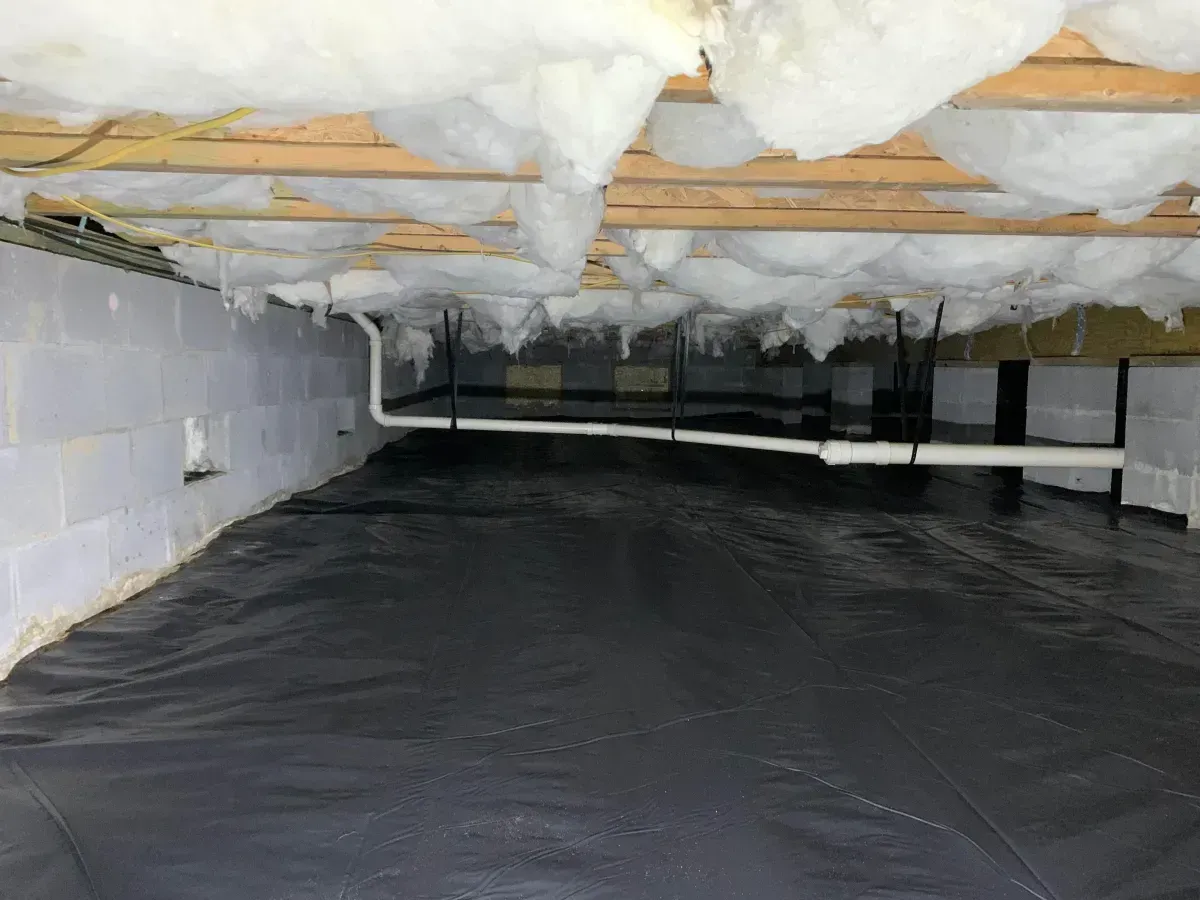
How Insulation Fits Into the Encapsulation System
Crawl space insulation does not function as a standalone solution in a coastal environment. The installation process begins with confirming that vapor barriers are sealed at the perimeter and around support columns, and that any existing insulation has been removed if it shows moisture damage or compression. Only after those conditions are confirmed does thermal insulation get installed—typically against the foundation walls in a conditioned crawl space configuration, which aligns with how modern encapsulation systems manage temperature and humidity simultaneously.
After installation, the most immediate observable change is floor temperature consistency across the living space above. Rooms that previously felt cold at foot level during winter months or warm and humid in summer stabilize noticeably once the crawl space below is properly sealed and insulated. The dehumidifier integrated into the system maintains the conditions that allow the insulation to sustain that performance over time rather than degrading within a few years.
The scope of insulation work varies depending on whether the crawl space is vented or unvented, the height clearance available for installation, and whether existing moisture damage requires remediation first. Homes with active water intrusion or visible mold require those issues to be addressed before insulation is added—installing over an active moisture problem accelerates material failure and creates a larger remediation project later.
Common Questions About Crawl Space Insulation
Homeowners in the Charleston area frequently ask about insulation options before understanding how the local climate affects material selection and installation sequencing. These answers address the most common points of confusion.
What type of insulation works best in a coastal crawl space?
Closed-cell spray foam and rigid foam board are the most moisture-resistant options for crawl space walls in humid coastal climates, while traditional fiberglass batt is prone to moisture absorption and compression when installed in unencapsulated spaces.
How do I know if my existing crawl space insulation has failed?
Insulation that has dropped away from the floor joists, appears darkened or compressed, or has a musty odor when you open the access hatch has already lost most of its thermal value and may be harboring mold growth.
Why does insulation installation happen after encapsulation at First Class?
Installing insulation into a space that still allows ground moisture and humid air to enter traps that moisture against structural materials—the insulation holds humidity against wood framing rather than blocking it, accelerating rot and reducing the insulation's effective lifespan.
How does Charleston's seasonal temperature variation affect crawl space insulation needs?
The region's combination of hot, humid summers and mild but damp winters means crawl space surfaces are rarely at stable temperatures, which creates repeated condensation cycles that degrade unprotected insulation materials faster than in drier inland climates.
What maintenance does crawl space insulation require after installation?
In a properly encapsulated and dehumidified crawl space, insulation requires minimal maintenance—the dehumidifier manages the conditions that would otherwise cause degradation, and annual inspections confirm the vapor barrier and seals remain intact.
First Class Crawlspace Solutions approaches insulation as one component of a complete crawl space system, not a single-trade installation—contact the office at (843) 471-0920 to arrange a full crawl space assessment and determine the right sequence of work for your property's current condition.