
Active Systems That Stop Re-Saturation
Crawl Space Moisture Control in Charleston for foundations cycling through repeated saturation without an active management system in place
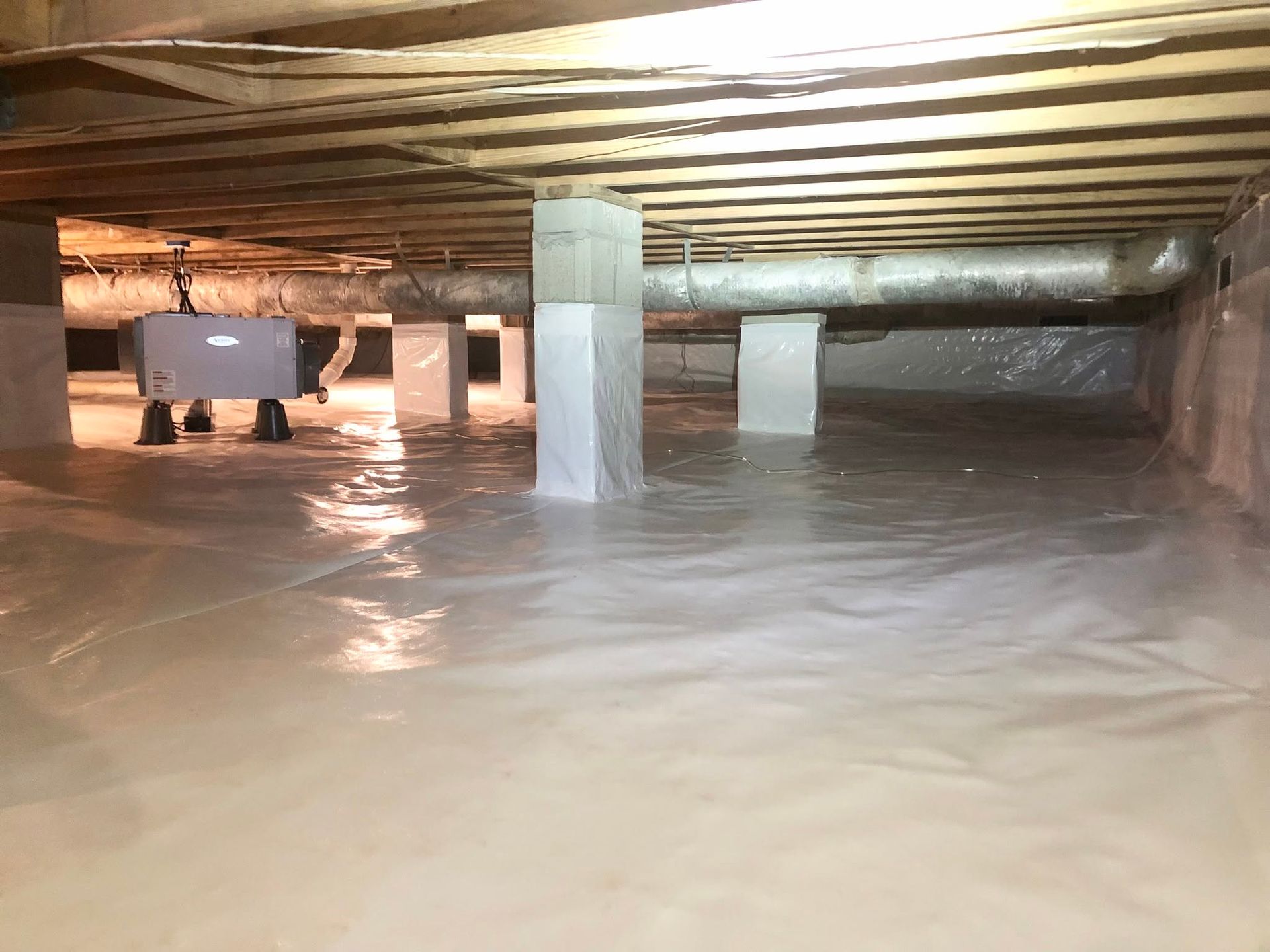
Charleston's coastal humidity doesn't behave like humidity in inland climates—it moves in cycles driven by tidal influence, seasonal rainfall, and overnight temperature differentials that pull ground moisture upward through exposed soil into crawl space air. First Class Crawlspace Solutions manages this specific moisture pattern through multi-layer systems that combine vapor barriers, dehumidifiers, drainage operation, and air circulation calibrated to the Lowcountry environment. Homeowners in downtown Charleston and West Ashley who notice sagging floors, visible mold on joist surfaces, or a persistent earthy smell inside the living area are observing what uncontrolled crawl space humidity does to structural wood over time.
Moisture control work begins with a licensed technician diagnosing the specific source and pathway of moisture before any equipment is placed or barrier material is installed. This diagnostic step separates active water intrusion—which requires drainage solutions—from elevated ambient humidity, which responds to dehumidification and vapor barrier installation. Applying only one tool to a multi-source moisture problem consistently underperforms, which is why the integrated approach addresses soil vapor, wall penetrations, and airborne humidity simultaneously.
Arrange a moisture diagnostic to determine whether your crawl space requires drainage, dehumidification, vapor barrier installation, or a combination of all three.
Why Single-Solution Moisture Control Fails in This Climate
Dehumidifier placement within a crawl space is not arbitrary—unit sizing is matched to the cubic footage of the space and positioned to draw from the areas with the highest moisture load, typically near foundation wall penetrations and at the lowest elevation point of the crawl space floor. In coastal South Carolina, dehumidifiers sized for interior living spaces are routinely undersized when placed in crawl spaces because the moisture load from soil vapor and wall seepage exceeds what residential-grade equipment is rated to handle continuously.
After a properly integrated moisture control system is operational, wood joist surfaces that previously showed surface mold or soft spots stabilize in moisture content, and the air entering the living space from below no longer carries the humidity load that drives condensation on subfloor systems and HVAC ducts. First Class Crawlspace Solutions monitors system performance after installation to confirm the crawl space is holding at appropriate humidity levels rather than cycling back toward saturation as the season changes.
Ongoing monitoring is a functional component of moisture control, not an optional follow-up—a crawl space that tested dry at installation can re-saturate within one wet season if drainage capacity is undersized or if a dehumidifier drain line becomes blocked. The systems First Class Crawlspace Solutions installs are designed for serviceability so that maintenance checks can confirm component function without requiring full crawl space excavation.
Answers to Frequent Service Questions
Crawl space moisture control generates specific questions around maintenance intervals, equipment selection, and what conditions indicate the system is working correctly versus when something has gone wrong.
How do I know if my crawl space moisture problem requires drainage or just a dehumidifier?
If water pools on the crawl space floor during or after rain events, drainage is required before dehumidification—a dehumidifier cannot remove liquid water, only airborne humidity.
What causes wood rot to develop in crawl spaces even in homes that aren't near standing water?
In Charleston's climate, relative humidity above 70% sustained for extended periods is sufficient to support fungal growth on wood framing without any liquid water contact—high ambient humidity alone creates the conditions for structural decay.
How often should a crawl space dehumidifier be serviced?
Drain lines, filters, and reservoir connections should be inspected at least annually, with more frequent checks during summer months when the unit operates under maximum load in this coastal climate zone.
Why does crawl space moisture affect indoor air quality in the living area above?
Stack effect air movement draws air upward from the crawl space into the living area, carrying mold spores, humidity, and soil gases along with it—moisture control at the foundation level reduces what enters the home through this pathway.
What is the difference between a vapor barrier and a moisture control system?
A vapor barrier slows soil moisture transmission through the ground plane but does not manage wall intrusion or airborne humidity—a complete moisture control system layers multiple components to address all three pathways simultaneously.
First Class Crawlspace Solutions brings licensed diagnostic and installation expertise to crawl space moisture control work across Charleston and surrounding communities. To discuss the specific moisture conditions in your crawl space, call (843) 471-0920 and schedule a site evaluation with one of the company's foundation technicians.