
Moisture Entry Points Closed at the Source
Crawl Space Sealing in Charleston for foundations actively admitting water through wall penetrations, vents, and perimeter gaps
Standing water after heavy rain, efflorescence streaking down foundation walls, and the persistent smell of damp earth inside a home are all signs that a crawl space perimeter is no longer keeping the Lowcountry's saturated soil conditions outside where they belong. First Class Crawlspace Solutions addresses these conditions through targeted crawl space sealing that closes the specific entry points water and humidity are using to migrate into the foundation space. The work is relevant for Charleston properties where decades of ground settling, aging vent screens, and deteriorating sill plates have opened pathways that standard ventilation strategies cannot compensate for.
Sealing work at First Class Crawlspace Solutions involves vapor barrier installation across the ground plane, perimeter moisture barriers along foundation walls, and closure of air gap pathways at the crawl space perimeter. In Charleston's coastal environment, the pressure differential between saturated exterior soil and the drier interior of a sealed crawl space drives moisture through even hairline cracks in block or poured foundations—which is why sealing is integrated with drainage systems rather than applied as a standalone surface treatment. Certifications in foundation and crawl space repair inform how each penetration point is evaluated and addressed.
Request an inspection to identify the specific entry points allowing moisture into your crawl space before conditions escalate to structural damage.
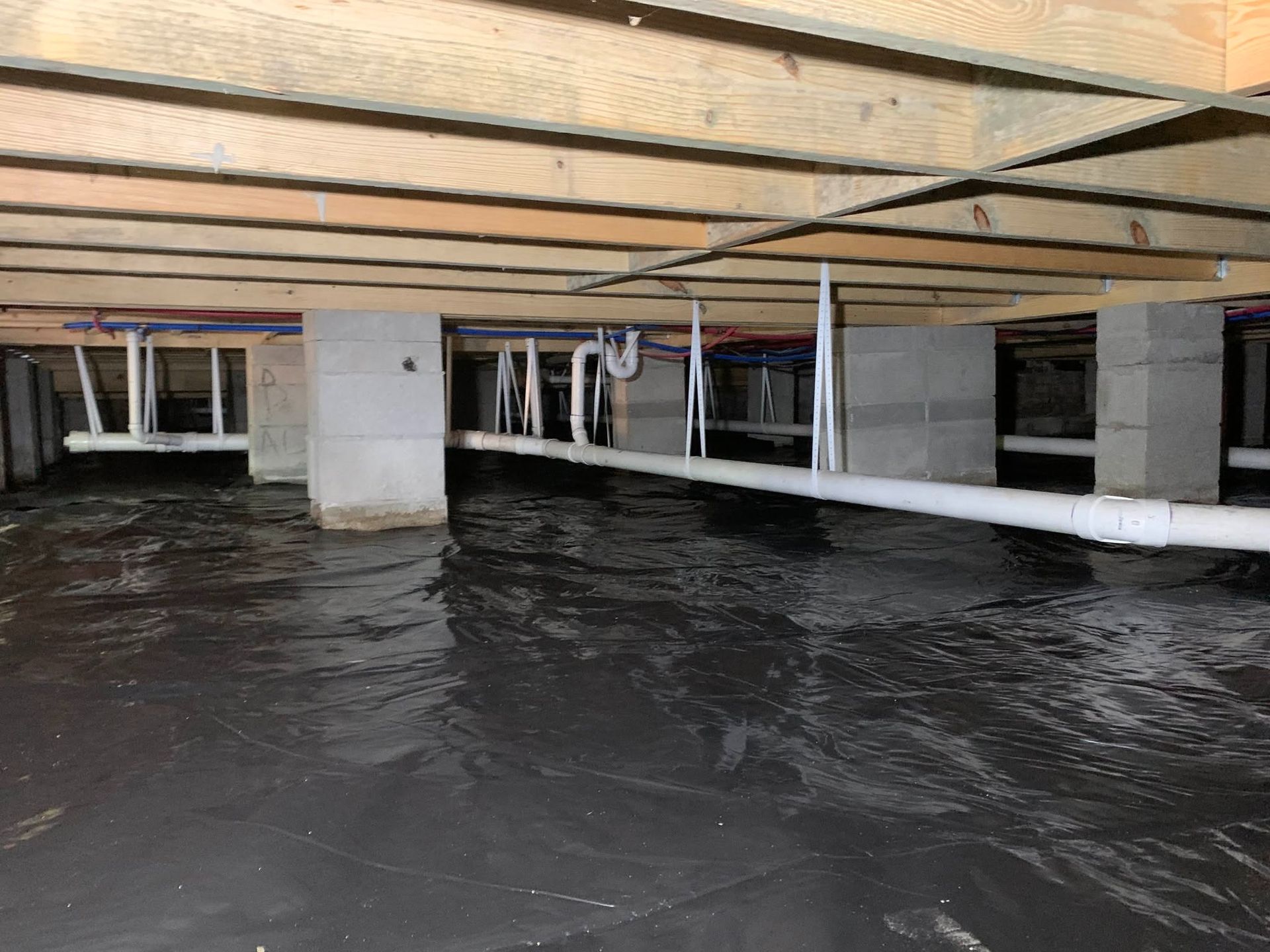
How Sealing Addresses Foundation Moisture Intrusion
The sealing process begins with a diagnostic walk-through of the crawl space to map where moisture is entering, not just where it has pooled. In West Ashley and coastal Charleston neighborhoods, this often reveals multiple simultaneous entry points—open foundation vents that predate current building standards, deteriorating sill plate connections, and low-slope drainage grading that directs surface runoff toward the foundation rather than away from it. Each entry point is sealed with the appropriate material for that surface type and exposure condition.
Once sealing is complete, the crawl space floor and lower wall surfaces are dry to the touch rather than visibly damp or coated in condensation. Wooden framing members that were previously at risk of fungal colonization are no longer in contact with standing moisture, and the boundary between the exterior soil environment and the foundation void becomes a controlled one. First Class Crawlspace Solutions integrates sealing with drainage management so water that cannot be repelled at the wall is captured and redirected before it accumulates.
Sealing scope varies based on foundation type, the number of active penetrations, and whether existing moisture has already compromised structural elements requiring repair before new barriers are installed. A crawl space with block foundation walls behaves differently from poured concrete under the same moisture load, and the sealing approach accounts for those differences rather than applying a single method across all foundation types.
What Property Owners Usually Ask
The questions that come up most often before sealing work begins relate to process sequencing, material selection, and how sealing differs from the broader encapsulation systems that many Charleston homeowners have heard about.
What is the difference between crawl space sealing and full encapsulation?
Sealing addresses moisture entry at specific penetration points and the ground plane, while full encapsulation includes dehumidifier integration and complete wall coverage—sealing is often a component within encapsulation rather than a separate alternative.
How does Charleston's water table affect crawl space sealing decisions?
Properties in low-elevation areas near tidal zones or filled land experience hydrostatic pressure against foundation walls, meaning sealing must be paired with drainage management to prevent pressure from forcing moisture through sealed surfaces.
Why do vapor barriers need to extend up the foundation walls and not just cover the ground?
Ground-only barriers leave the wall-to-footing joint exposed, which is one of the most common moisture entry points in Charleston's block foundation homes.
When should sealing be completed before other crawl space work?
Sealing is a prerequisite for dehumidifier placement—running a dehumidifier in an unsealed crawl space requires the unit to process exterior air continuously, which overworks the equipment and prevents the space from stabilizing.
What materials are used for perimeter moisture barriers?
Barrier materials are selected based on wall substrate—block foundations, poured concrete, and masonry each require different adhesion methods and overlap dimensions to maintain a continuous seal under seasonal movement.
First Class Crawlspace Solutions serves Charleston properties including West Ashley and surrounding coastal neighborhoods where moisture intrusion into crawl spaces is an ongoing structural concern rather than an occasional weather event. Call (843) 471-0920 to arrange an evaluation and receive a sealing recommendation based on your foundation's specific conditions.