Structural Damage Corrected Before Waterproofing Begins
Crawl Space Repair in Charleston for foundations with rotted framing, sagging beams, or compromised structural members from long-term moisture exposure
Rotted floor joists, sagging beams, and softened subfloor panels are what years of uncontrolled crawl space moisture produce in Charleston's humid coastal climate—and they represent a structural problem that no vapor barrier or dehumidifier can correct after the decay has taken hold. First Class Crawlspace Solutions performs structural crawl space repair as a prerequisite step before any encapsulation or waterproofing work begins, replacing compromised framing, shoring sagging beams, and stabilizing foundations that have shifted under the weight of moisture-driven deterioration. This in-house repair capability is a functional distinction in the Charleston market, where most crawl space waterproofing companies subcontract structural work or decline it entirely.
The repair process begins with a licensed contractor assessment of the specific structural members affected—rotted sill plates, failed rim joists, deteriorated mid-span beams, and damaged subfloor sheathing each require different intervention methods and materials. In West Ashley and downtown Charleston, wood-framed crawl spaces that predate modern moisture standards often show layered damage where surface mold growth on joists has progressed to interior decay that isn't visible without probing. First Class Crawlspace Solutions partners with development contractors to handle the full range of repairs—framing replacement, foundation stabilization, and flooring restoration—so that structural work and waterproofing are coordinated rather than handed off between separate trades.
Schedule a structural assessment to determine which crawl space components require repair before encapsulation or sealing work can be completed effectively.
The Difference Between Repair and Waterproofing Alone
Encapsulating a crawl space without first repairing structural damage does not stop the deterioration already underway—it seals decaying wood inside a controlled environment where it continues to break down without the ventilation that previously allowed partial drying. Licensed technicians at First Class Crawlspace Solutions complete a probing and visual inspection of all accessible framing members before determining the repair scope, because moisture damage to structural wood frequently extends further than surface staining or soft spots suggest. Beam shoring, joist sistering, and full framing replacement are all part of the in-house capability depending on what the structural assessment finds.
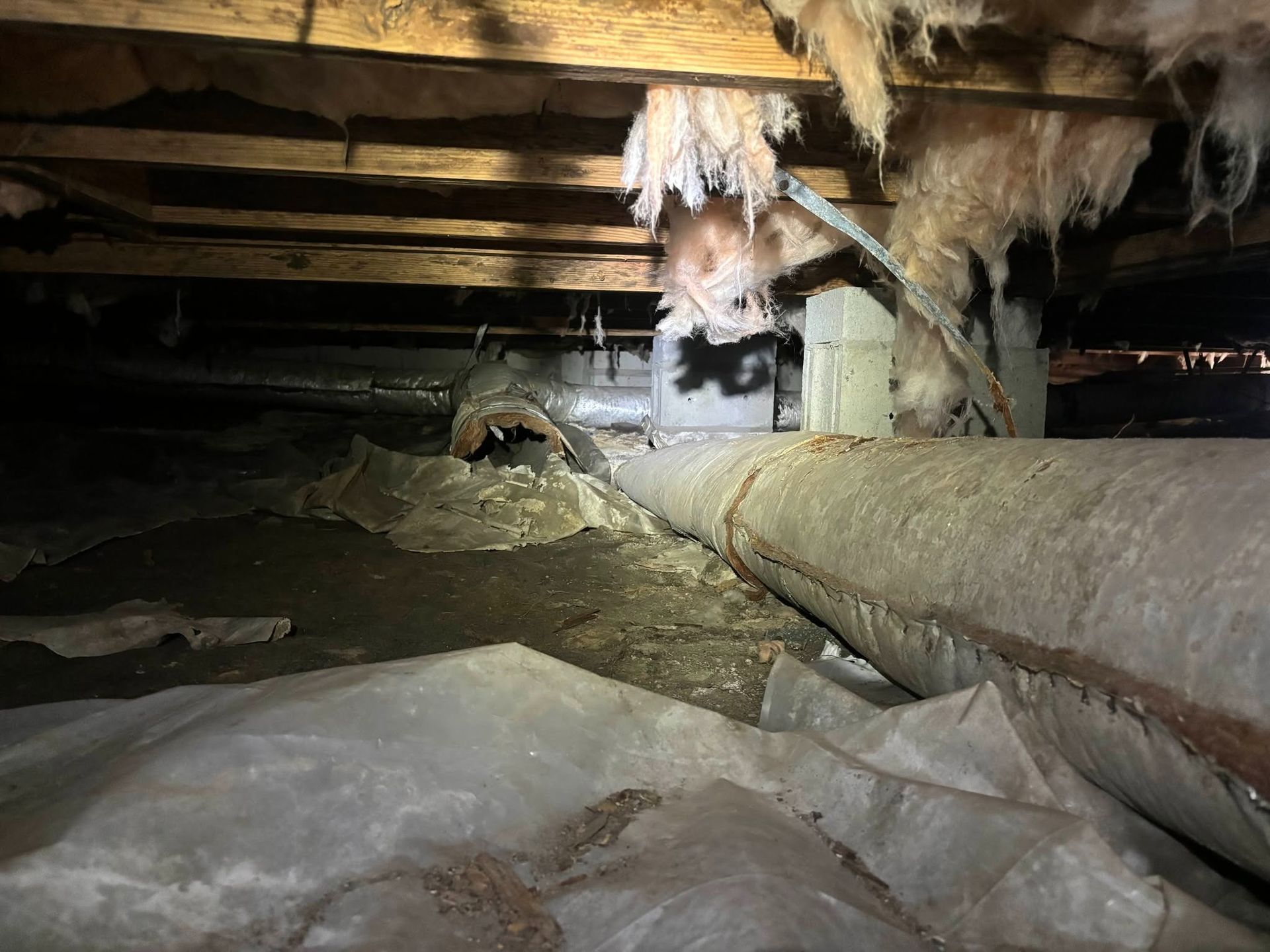
After structural repairs are completed, floors above the crawl space that previously showed movement or soft spots underfoot return to a stable feel because the framing carrying the load is no longer compromised at its connection points or mid-span. The crawl space itself transitions from a space with visible deterioration—hanging insulation, displaced vapor barrier, blackened wood surfaces—to a structurally sound foundation environment that encapsulation systems can maintain correctly. This sequencing is why First Class Crawlspace Solutions handles repair and waterproofing as a unified project rather than two separate service calls.
Repair scope varies considerably depending on how long moisture exposure went unaddressed—a crawl space that has been actively wet for two seasons presents different structural conditions than one where moisture has been present for a decade without intervention. Foundation stabilization needs, where soil settlement has allowed footings to shift, are evaluated separately from framing repairs and may involve pier installation or footing reinforcement depending on what the structural assessment identifies.
What Homeowners Often Ask First
Crawl space repair questions typically center on sequencing, repair scope, and how the structural work connects to the waterproofing that follows—particularly for Charleston homeowners who have received separate bids from structural and waterproofing contractors.
How do I know if my crawl space joists need replacement versus just treatment?
Joists that probe soft at the surface or show visible cross-grain cracking have lost structural integrity and require replacement—surface mold on otherwise firm wood may respond to cleaning and moisture control, but the determination requires physical inspection rather than visual assessment alone.
Why can't encapsulation be installed first and structural repairs done later?
Vapor barriers and dehumidifiers must be removed to access framing for repair, making it significantly more disruptive and costly to sequence the work in reverse—structural repair first is the correct installation order for both practical and quality reasons.
What makes First Class Crawlspace Solutions different from other crawl space companies in Charleston?
Most regional crawl space waterproofing companies do not perform structural framing or foundation repairs in-house, requiring homeowners to coordinate between separate contractors—First Class handles both in a single project through its partnership with development contractors.
How does Charleston's climate accelerate crawl space structural damage compared to drier regions?
The Lowcountry's sustained high humidity creates the moisture content conditions in wood framing that support fungal growth even without liquid water contact—this means structural decay can progress in crawl spaces that appear dry to a casual inspection.
What visible signs indicate a crawl space needs structural repair before waterproofing?
Floors that flex noticeably underfoot, doors or windows that have shifted out of square, and crawl space framing that shows black staining or surface softness when pressed are the primary indicators that structural assessment should precede any waterproofing work.
First Class Crawlspace Solutions brings licensed structural and waterproofing expertise to crawl space repair projects across Charleston, including properties in West Ashley and downtown neighborhoods where moisture-driven foundation damage is most concentrated. Call (843) 471-0920 to put your property on the inspection schedule and receive a repair assessment that identifies exactly what needs to be corrected before encapsulation begins.