Mold Remediation Requiring Licensed Technical Work
Crawl space mold treatment in Charleston for homes where wood framing, subfloor materials, or ground surfaces show active fungal growth
Visible mold on crawl space framing is rarely an isolated surface condition in the Lowcountry—it indicates that humidity levels have remained high enough for long enough to allow fungal colonization to take hold in wood and organic material. First Class Crawlspace Solutions carries out crawl space mold treatment using licensed remediation technicians trained specifically in moisture-related fungal growth, not general construction crews. The distinction matters because mold in a coastal crawl space requires both removal of affected material and correction of the conditions that allowed growth to begin, or the problem returns within one to two seasons.
The assessment process identifies the extent of mold growth across framing members, subfloor panels, and ground surfaces, and determines whether materials can be treated in place or require removal. In Charleston's climate, untreated mold on floor joists spreads laterally along wood grain and can reach flooring materials above the crawl space before homeowners notice symptoms in the living space—musty odors and soft floor spots are typically indicators of advanced colonization rather than early-stage growth. Treatment of surfaces is followed by vapor barrier installation or upgrade and dehumidifier integration to prevent recurrence, because surface remediation without moisture control correction produces temporary results.
Schedule a mold assessment to determine the scope of affected materials and identify the moisture conditions driving active growth in your crawl space.
How Mold Treatment Addresses the Full Scope of the Problem
Licensed mold remediation in a crawl space involves more steps than applying a treatment product to visible surfaces. The process begins with a full moisture reading at multiple points in the space, identification of all affected materials, and a determination of which framing members have lost structural integrity from fungal decay versus those that can be treated and preserved. First Class Crawlspace Solutions crew members are licensed for crawl space work—not credentialed as general contractors performing remediation as a secondary service—which affects both the treatment protocols used and the ability to assess structural damage accurately during the same visit.
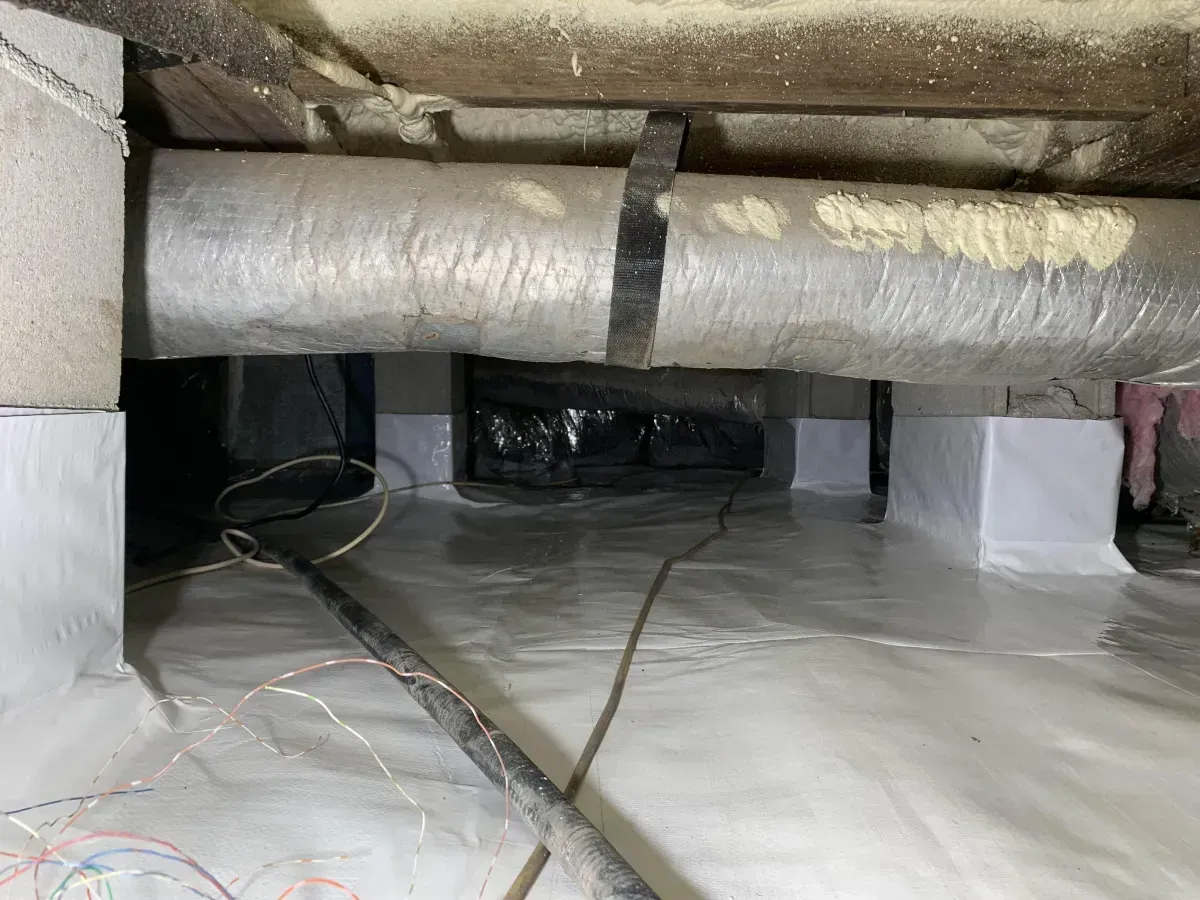
After treatment is complete, the crawl space no longer carries the musty, organic odor that travels through floor gaps and HVAC penetrations into the living space above. Wood surfaces that have been treated and protected behind a sealed vapor barrier stop providing the moisture and organic material that mold requires to grow, and the dehumidifier installed as part of the follow-up system maintains the humidity range that prevents recolonization. The combination of remediation and encapsulation—which First Class pairs on the majority of its mold treatment projects—addresses both the existing condition and the underlying mechanism that produced it.
When framing members have decayed beyond what surface treatment can address, the remediation scope expands to include structural repair—joist sistering, beam replacement, or subfloor panel removal where rot has compromised load-bearing capacity. This is a decision point that emerges from the initial assessment, and homeowners should ask any contractor performing mold treatment whether they can identify and correct structural damage during the same project or whether separate contractors will be required for that phase.
Questions Before Starting Your Mold Treatment Project
Crawl space mold treatment raises questions about safety, scope, and what the process involves at each stage—particularly for homeowners who have not had a crawl space inspection recently and are uncertain about what conditions exist below their living space.
How dangerous is mold in a crawl space to the people living above it?
Mold spores and volatile organic compounds produced by fungal colonies in crawl spaces travel upward through floor gaps, HVAC systems, and utility penetrations—the stack effect that draws air from the crawl space into living areas means occupants are exposed to air that has passed through the affected space.
What determines whether a framing member needs to be replaced versus treated?
Wood that has lost surface hardness, shows visible decay of internal grain structure, or no longer holds fasteners securely has reached a stage where surface treatment does not restore structural function—replacement or sistering is the appropriate repair for those members.
Why does mold come back after treatment in some crawl spaces?
Recurrence after treatment almost always indicates that the moisture source was not corrected—treatment without vapor barrier installation and dehumidification leaves the same humidity conditions that produced the original growth, and mold recolonizes treated surfaces within one to two seasons in this climate.
How does the coastal Charleston climate affect mold treatment timing?
Year-round humidity in this region means there is no natural dry season that temporarily reduces mold pressure, making treatment timing less critical than ensuring the follow-up moisture control system is installed before the next high-humidity period begins.
What documentation is produced after a licensed mold remediation project?
Licensed remediation work typically includes a pre-treatment moisture and mold extent assessment, a treatment log identifying products and methods used, and post-treatment documentation confirming the conditions in the space—useful for real estate transactions and insurance purposes.
First Class Crawlspace Solutions handles mold treatment as an integrated remediation and encapsulation project—call (843) 471-0920 to arrange a licensed assessment and understand the full scope of work your crawl space requires before committing to any remediation approach.